
Newsletter
AI Fast Track
Human-written AI news and insights for software teams and CTOs.
Subscribe
About this service
Build scalable, maintainable software with our experienced engineering teams. We deliver high-quality code and best practices that help your product succeed.
Go to serviceAI engineering
We help engineering teams get the most out of AI, both in how they build software and in the products they build.
AI is changing how software gets built, not just what gets built into it. Engineering teams are working with coding agents, AI-assisted development environments and increasingly autonomous workflows. At the same time, products are gaining capabilities built on machine learning, LLMs, retrieval and agents. We help with both.
AI can make an engineering team dramatically faster. It can also help that team produce technical debt dramatically faster. We help teams become truly AI-native: choosing the right tools, giving agents the right context, designing effective workflows and adapting engineering practices to a world where more and more code is generated by AI. The goal is better software shipped faster, not more code. The full playbook is in our guide to implementing AI in an engineering team.
Adding an LLM to your product is easy. Building an AI system customers can actually rely on is engineering. We design and build the foundations and systems behind production AI: reliable data pipelines, machine learning, retrieval and RAG, LLM-based features and autonomous agents. And we don't assume the newest technology is the right one. Sometimes you need an agent. Sometimes classic machine learning is the better answer. Sometimes deterministic software will outperform both. We help you make that call.
The technology changes quickly. Good engineering principles don't. A prototype that works once is not a quality signal. An agent that succeeds most of the time is not necessarily ready for production. And an engineering team generating twice as much code is not necessarily twice as productive.
We bring the engineering discipline needed to turn promising AI into dependable software: architecture, testing, evaluation, observability, security, review and clear ownership. We use cutting-edge technology where it creates an advantage and proven engineering where predictability matters more. The logo is never the point.
Four areas where we deliver measurable improvements, for your product and for the team that owns it.

Coding agents, agentic workflows, automated review, and the practices you need when AI produces code faster than humans can review it: clear architecture, strong conventions, quality gates and deliberate human oversight.
Discover moreReady to talk?

AI is only as dependable as the data underneath it. We build ingestion and transformation pipelines, data platforms and machine-learning systems that work outside a notebook and keep working in production.
Discover moreReady to talk?

LLM features, retrieval systems and agents designed for real users: context, tool use, orchestration, permissions, failure modes, latency and cost all become part of the architecture. Retrieval gets measured, never assumed.
Discover moreReady to talk?

AI systems are not deterministic, so quality needs new instruments. We build evaluation loops, automated tests, monitoring and guardrails, and we make failures visible before your customers find them.
Discover moreReady to talk?
We don't arrive with a preferred model, framework or architecture. We start with what you're trying to achieve, then choose the simplest technology that can solve the problem well. Sometimes that's an LLM or an agent. Sometimes it's classic machine learning. And sometimes the best AI architecture contains surprisingly little AI.
We don't disappear for three months and return with a mysterious AI system. Our engineers work alongside yours, building the product while transferring the knowledge needed to understand, operate and extend it. When we help your team adopt AI, we work in your actual codebase and workflows, never on generic prompting techniques in isolation.
The right stack is the one your team can maintain. We choose tools based on your skills, constraints and long-term reality, not fashion. We document, pair and establish ownership. No mysterious pipelines, no ghost systems: your team keeps shipping after we're gone.
AI creates a new category of engineering problems. Some are about the product. Others are about the team building it.

“AI made us faster. We’re not sure it made us better.”

“We have data but nobody is using it to make decisions.”

“After auditing our product, madewithlove made the bold recommendation to rebuild our platform from scratch. This allowed us to bring much-needed security upgrades and modern architectures to our previ…”
Jef Daniels, CEO at Impact Us Today

“Our product is full of bugs.”

“We’re afraid AI-generated code is quietly piling up technical debt.”

“By assigning two software engineers from madewithlove, you’re ensuring a quality codebase, which for me was crucial, instead of outsourcing it abroad and having to recode part of the codebase again af…”
Thomas Vanhumbeeck, Cofounder & CEO at FixForm

“AI generates code faster than we can review it.”
“We need to scale now.”
We work with companies that want to get their data and AI right. Here are examples of how our approach translated into real results.
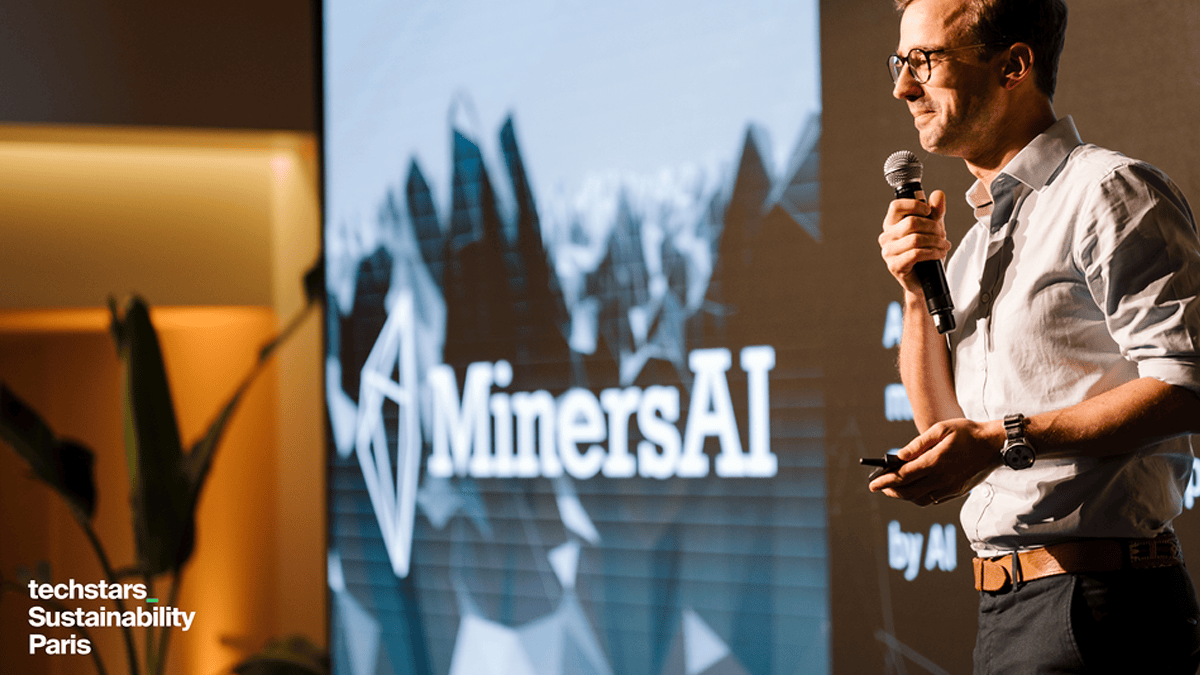
From AI prototype to a scalable mineral intelligence platform
We helped MinersAI build their SaaS platform from the ground up, providing frontend engineering, CTO-in-residence leadership, and AI & data expertise to take them from a research-first team to a platform used by some of the largest government organisations and mining companies worldwide.
You will not see companies like Amazon among our past clients. You will, however, see the names that will soon rock the SaaS world because we helped them predict risks and avoid failure.
“The madewithlove engineers brought some more experience in our team of young talents. Their lead-by-example attitude helped us establishing the required best-practices to grow as a product company.”

Stijn Vannieuwenhuyse
Head of Engineering, Teamleader

“As a real transition-expert, Andreas helped us with creating the software. This wasn’t an easy task because our technical team had to grow alongside the number of clients.”

Jeroen De Wit
CEO, Teamleader
“Madewithlove came in when we needed to build a robust web environment with a tight budget and schedule as a start-up. They understood this, took the lead and managed to get us up and running in no time. They also made some important technical choices that allow us to scale our…” Read more

Julien Yee
Co-Founder, JUCE

FROM 190+ SAAS AUDITS
89% ship without automated testing
Manual QA dominates at every stage, seed to M&A.
Why QA becomes the bottleneckFROM 190+ SAAS AUDITS
51% mishandle credentials in the codebase
The finding investors react to hardest.
The security hole nobody talks aboutOur latest thinking on AI-native engineering, data foundations, and building reliable AI systems.
Blog
9 min read
Blog
4 min read
Blog
Whether you want to make your engineering team more effective with AI, build AI into your product, or figure out where AI actually makes sense, we're ready to dig in.
Everything you need to know about working with our AI engineers.
No. You need data that is good enough, understood, owned and monitored. Perfection is a myth; predictability is the goal. We can improve the data foundation while incrementally building the capabilities that depend on it.
It depends on the problem. We look at the available data, required accuracy, latency, cost, predictability and how much autonomy the system actually needs. Sometimes a simple model is enough. Sometimes you need retrieval or an LLM. Sometimes you need none of them.
Yes. We work with teams on AI-native software development: tooling, context, coding agents, workflows, automated review and the engineering practices required to use them responsibly at scale. The objective is better engineering throughput, not maximum AI usage.
By treating AI-generated code as software engineering rather than a special category of code. Architecture, conventions, tests, static analysis, automated quality gates and review still matter. If AI increases implementation speed, your feedback and review systems need to become faster and stronger with it.
Not necessarily. Agents are powerful when a system genuinely needs to reason, use tools and make decisions across multiple steps. They are also more complex, less predictable and harder to evaluate than deterministic software. We will use an agent when that trade-off makes sense, not because agents happen to be fashionable.
We define what good looks like and measure it: retrieval metrics, evaluation datasets, automated evals, production monitoring and human review. A demo that works once is not a quality signal.
Usually. We prefer incremental integration over AI transformation theatre. We identify where AI can create real value, establish the foundations it needs and ship capabilities in manageable slices.
Yes. We plan our exit from day one. We build with your team and your constraints in mind, transfer ownership and avoid architectures that require permanent external expertise to understand. The right system is the one your team can keep improving, not the most impressive one.